

KEYNOTE SPEAKERS
Felip Riera Palou
SECOM research group & Balearic Research Institute on Artificial Intelligence (IBIA), Universitat de les Illes Balears
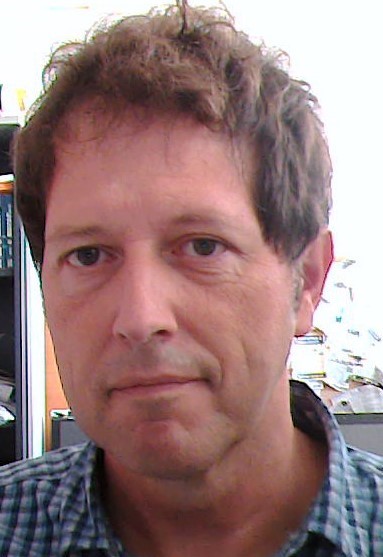
Title: Beyond Cells: Integrating Cell-Free Architectures into the 6G Ecosystem
Abstract:Cell-free massive MIMO (CF-mMIMO) has attracted considerable attention from the research community over the past decade and is widely regarded as a key enabling technology for 6G. Although the fundamental principles of the cell-free architecture are now well established, its practical role within 6G remains an open question, presenting several important challenges. These include its integration with existing cellular infrastructures as well as its interplay with other emerging 6G enablers, such as UAV-based nodes and LEO satellite systems. This talk will examine both the opportunities and the limitations of the cell-free paradigm in shaping the next generation of mobile networks.
Bio:Felip Riera Palou was born in 1973 in Palma (Balearic Islands). He graduated in Computer Engineering from the University of the Balearic Islands (UIB) in 1997. He obtained the MSc and PhD degrees in Communications Engineering from the University of Bradford (United Kingdom) in 1998 and 2002, respectively, an MSc in Statistics from the University of Sheffield (United Kingdom) in 2006, and an MSc in Data Science and Engineering from UNED (Spain) in 2025. From June 2002 to May 2004, he was a Marie Curie postdoctoral fellow at Philips Research (Eiindhoven, The Netherlands) within the Digital Signal Processing Group. From June 2004 to March 2005, he was a senior member of the Philips Research staff. In April 2005, he joined the Mobile Communications Group (MCG) at UIB as a Ramón y Cajal postdoc. From January 2010 to February 2024, he was a Contracted Doctor Professor affiliated with the I3 program (Research Intensification, funded by the MEC) at UIB. From March 2024, he is a (tenured) Associate Professor within the Dept. of Mathematics and Informatics at UIB. He is affiliated to the SECOM research group and the Balearic Research Institute on Artificial Intelligence (IBIA). Currently, he researches various aspects of adaptability, energy efficiency, and resource management in 6G networks in general, with special attention to heterogeneous cell-free networks. Felip is a Senior Member of the IEEE.
Petar Popovski
Aalborg University, Denmark

Title: Wireless Communication and Sensing as enablers of Physical AI
Abstract:With the advent of 5G technology, the notion of latency got a prominent role in wireless connectivity, serving as a proxy term for addressing the requirements for real-time communication. As wireless systems evolve toward 6G and embrace Artificial Intelligence (AI), the ambition to immerse the digital into physical reality will increase. This will eventually lead to Physical AI, referring to intelligent systems that interact with the physical world in real time, making decisions from multimodal sensor updates traversing heterogeneous, unreliable wireless links. This talk will present the concept of timing in wireless communication systems and its relation to Physical AI in terms of information generation, processing, transmission, and reconstruction. Inspired by multisensory perception in humans, the talk will introduce Temporal Windows of Integration (TWI) for wireless systems that combine sensing and communication and show their role in determining causality and simultaneity in perceptive wireless networks. It will be shown how TWI serve as a unifying framework to enforce three timing primitives essential for decision-time coherence, namely simultaneity, causality, and usefulness. Next, considering the problem of multimodal inference, adaptive TWIs enable a neuro-inspired, non-blocking inference paradigm that dynamically adjusts to stochastic delays across heterogeneous streams, outperforming state-of-the-art methods on audio-visual tasks. A key takeaway is that future Base Stations must embed timestamping functionality enforcing chronology, simultaneity, and causality, ensuring trustworthy and coherent Physical AI operation.
Bio:Petar Popovski (IEEE Fellow) is a Professor at Aalborg University, where he heads the section on Connectivity and is Director of CLASSIQUE, a center for classical communication in quantum systems. He also holds the position of a Visiting Excellence Chair at the University of Bremen and Visiting Professor at University of Sts. Cyril and Methodius (UKIM) in Skopje. He received his Dipl.-Ing (1997) and M. Sc. (2000) degrees in communication engineering from UKIM, Skopje and the Ph.D. degree (2005) from Aalborg University. He received an ERC Consolidator Grant (2015), the Danish Elite Researcher award (2016), IEEE Fred W. Ellersick prize (2016), IEEE Stephen O. Rice prize (2018), Technical Achievement Award from the IEEE Technical Committee on Smart Grid Communications (2019), the Danish Telecommunication Prize (2020) and Villum Investigator Grant (2021). He authored the book ``Wireless Connectivity: An Intuitive and Fundamental Guide'', published by Wiley in 2020. He was the Chair of the IEEE Communication Theory Technical Committee and Editor-in-Chief of IEEEE JOURNAL ON SELECTED AREAS IN COMMUNICATIONS. His research interests are in communication theory.
Ana Garcia Armada
Carlos III University of Madrid

Title: Arrays of liquid antennas: communications and processing advances
Abstract:The notable advantages of multiple input – multiple output (MIMO) processing have motivated the interest for scaling this concept up. However, increasing the array size has complexity implications. In turn, the concept of reconfigurability has currently stimulated a lot of research around the idea of adapting the channel to the communications needs and not the opposite. This talk discusses the emerging concept of arrays of liquid antennas to bring reconfigurability to the transmitter and receiver ends. The focus is on arrays made of liquid alloys, such as eGaIn. The main challenges to design and integrate this concept in next-generation wireless communications systems are described, as well as the many possible advantages, namely, increasing energy efficiency, limiting electromagnetic exposure, or mitigating blockage. Chanel models and adaptation algorithms are explained, which are being designed based on a careful understanding of the movement of the liquid elements and their practical integration with communications hardware, derived from preliminary experiments.
Bio:Ana García Armada is a Professor at Universidad Carlos III of Madrid, Spain, where she is leading the Communications Research Group. She has been a visiting scholar at Stanford University, Bell Labs and University of Southampton. She is an IEEE Fellow. She has published more than 300 papers in international journals and conference proceedings and she holds seven granted patents, all related to wireless communications. She is serving on the editorial board of IEEE Open Journal of the Communications Society (Associate Editor in Chief since 2024) and ITU Journal on Future and Evolving Technologies. She has been a member of the organizing committee of IEEE MeditCom 2024 (General Chair), IEEE WNCN 2024, IEEE Globecom 2022 and IEEE Globecom 2021 (General Chair), among others. She has received the Young Researchers Excellence Award from University Carlos III of Madrid. She was awarded the third place Bell Labs Prize 2014 for shaping the future of information and communications technology. She received the Outstanding service award from the IEEE ComSoc Signal Processing and Communications Electronics technical committee in 2019 and the Outstanding service award from the IEEE ComSoc Women in Communications Engineering Standing Committee in 2020. She received the IEEE ComSoc/KICS Exemplary Global Service Award in 2022.
Ana Pérez-Neira
CTTC - Centre Tecnològic de Telecomunicacions de Catalunya

Title: Swarm Beamforming: When Satellites Become a Distributed Antenna Array
Abstract: Large constellations of small satellites are opening new opportunities for broadband direct-to-cell connectivity. This keynote explores swarm beamforming, where multiple satellites cooperate as the radiating elements of a single distributed antenna array. By exploiting a large spatial aperture, satellite swarms can generate highly directive, user-centric beams and spatially multiplex multiple users. However, this approach introduces fundamental trade-offs involving beamwidth, sidelobes, grating lobes, interference, and synchronization. The talk will examine how swarm geometry and satellite distribution affect system performance, with particular attention to random formations, and discuss whether satellite swarms can ultimately operate as a single distributed electromagnetic device.
Bio:Ana Pérez-Neira is full professor at Universitat Politècnica de Catalunya in the Signal Theory and Communication department. Currently, she is the Director of Centre Tecnològic de Telecomunicacions de Catalunya, Spain. Her research is in signal processing for communications, focused on satellite communications. She has been the leader of over 35 projects and has participated in over 50. She is the author of over 80 journal papers and more than 400 conference papers. She is co-author of 7 books and 13 chapters, and 8 patents, all contributing to the advancement of signal processing and communications. She has been speaker at 70+ invited talks, guest editor for 10 special issues. She was Vicerector for Research at UPC (2010-13). She created UPC Doctoral School (2011). She is a recipient for the 2018 EURASIP Society Award. She is IEEE Fellow, EURASIP Fellow, member of the Real Academy of Science and Arts of Barcelona, and of the Real Academy of Engineering. She is awarded the ICREA Academia and has the Narcis Monturiol award by the Catalan government due to her research trajectory. She has been recognized in 2025 the Salvà Campillo Award for Outstanding Personality of the 30th Night of Telecommunications and IT.
Xavier Mestre
CTTC - Centre Tecnològic de Telecomunicacions de Catalunya

Exploiting Polarization in Near-Field MIMO: From Spatial Multiplexing to Beamfocusing
Abstract: The transition to near-field, extra large and holographic MIMO requires a reassessment of the fundamental resources available for spatial communications. This talk highlights the central role of polarization in determining these limits. We first analyze the spatial degrees of freedom of polarized uniform planar arrays under line-of-sight propagation, establishing closed-form conditions under which multiple spatial streams can be supported. In particular, we show that tri-polarized arrays fundamentally extend the multiplexing capabilities of dual-polarized architectures by guaranteeing two spatial degrees of freedom throughout the entire angular domain. We then present complementary results on beamfocusing, deriving analytical conditions for its feasibility and closed-form descriptions of the corresponding coverage regions. The presented framework provides a unified physical understanding of how polarization, array geometry, and near-field propagation govern the spatial capabilities of next-generation holographic MIMO systems.
Bio:Xavier Mestre is a Research Director and Scientific Coordinator of the Centre Tecnològic de Telecomunicacions de Catalunya (CTTC). He received the M.S. and Ph.D. degrees in Electrical Engineering from the Technical University of Catalonia (UPC) in 1997 and 2002, respectively, and a degree in Mathematics in 2011. His research interests include statistical signal processing, wireless communications, MIMO systems, and near-field/holographic communications. He has authored more than 150 scientific publications and has served as Senior Area Editor of the IEEE Transactions on Signal Processing (2019-25). He has been chair (2025-) and vice-chair (2023-24) of the IEEE Signal Processing Theory and Methods (SPTM) Technical Committee and a member of the Board of Directors of EURASIP since 2025. He has served as General Chair of the IEEE International Conference on Acoustics, Speech and Signal Processing (ICASSP) in 2020 and 2026.
Angel Lozano
Universitat Pompeu Fabra

Title: Extreme MIMO: The Good, the Bad, and the Ugly
Abstract:With the carrier frequency and the array apertures growing steadily higher, the number of antenna elements per array has gone from a handful to hundreds, and soon thousands. The spatial density of elements may also increase, leading to so-called holographic arrays. Altogether, we are heading towards the emerging paradigm of extreme multiple-input multiple-output communication, which is stretching, even breaking, the operating conditions that had prevailed in the past. This lecture discusses the potential benefits of this paradigm, the main challenges that it poses, and new issues that it brings about.
Bio:Angel Lozano is a Professor at Universitat Pompeu Fabra (UPF) in Barcelona, Spain. Prof. Lozano received a Ph.D. from Stanford University in 1998. In 1999, he joined Bell Labs (Lucent Technologies, now Nokia), where he was a member of the Wireless Communications Research Department until 2008. Between 2005 and 2008 he was also an Adjunct Associate Professor of Electrical Engineering at Columbia University. Prof. Lozano is a Fellow of the IEEE. He served as area editor for the IEEE Transactions on Wireless Communications and as associate editor for the IEEE Transactions on Information Theory, the IEEE Transactions on Communications, the Journal of Communications & Networks, and the ComSoc Technology News. He has guest-edited various journal special issues and is actively involved in committees and conference organization tasks for the IEEE; in particular, he was the Chair of the IEEE Communication Theory Technical Committee and was elected to the Board of Governors of the IEEE Communications Society. Prof. Lozano is the coauthor of the textbook “Foundations of MIMO Communication,” released by Cambridge University Press in 2019. His papers have received several awards, including the 2009 Stephen O. Rice prize, the 2016 Fred W. Ellersick prize, and the 2016 Communications Society & Information Theory Society joint paper award. He also held an ERC Advanced Grant and served as Distinguished Lecturer of the IEEE Communications Society.
Emil Björnson
KTH Royal Institute of Technology

Title: Near-field communications: From beamfocusing to wavefront engineering
Abstract:As the element count increases in antenna arrays and the carrier frequency rises, a new operating regime emerges: the radiative near-field. It spans a distance range where the reactive near-field effects are negligible, but the wavefronts remain noticeably curved. This curvature enables novel applications and wavefront designs, far beyond current far-field practices.
In this talk, we will first cover the theoretical fundamentals of radiative near-field propagation, including different ways to define the radiative near-field, physically compliant channel models, and how to perform finite-depth beamfocusing. The latter feature has recently been experimentally validated at KTH and shown to be robust to hardware imperfections. We will then explore alternative wavefronts, such as Bessel and Airy beams, and uncover their unique features and applications. There is no one-size-fits-all solution for 6G systems, but a toolbox of near-field features suitable for different purposes.
Bio:Emil Björnson is a Professor of Wireless Communication at the KTH Royal Institute of Technology, Stockholm, Sweden. He is an IEEE Fellow, Digital Futures Fellow, Wallenberg Academy Fellow, and Clarivate Highly Cited Researcher. He has a podcast and YouTube channel called Wireless Future. His research focuses on multi-antenna communications and radio resource management, using methods from communication theory, signal processing, and machine learning. He has authored four textbooks and published 70 simulation code repositories. He has received the 2018 and 2022 IEEE Marconi Prize Paper Awards in Wireless Communications, the 2019 EURASIP Early Career Award, the 2019 IEEE Communications Society Fred W. Ellersick Prize, the 2019 IEEE Signal Processing Magazine Best Column Award, the 2020 Pierre-Simon Laplace Early Career Technical Achievement Award, the 2020 CTTC Early Achievement Award, the 2021 IEEE ComSoc RCC Early Achievement Award, the 2023 IEEE ComSoc Outstanding Paper Award, and the 2024 IEEE Stephen O. Rice Prize.
Marco Di Renzo
CNRS Research Director Head, IETR Signals and Communications Department CNRS-CentraleSupelec, France Professor of Telecommunications Engineering Director, Centre for Telecommunications Research King’s College London, UK

Title: Wave-domain computing for wireless communications
Abstract:Future wireless networks will be required to deliver substantial improvements in data rate, energy efficiency, and latency, while simultaneously enabling the seamless integration of communication, sensing, and computation functionalities. In this context, programmable wave-domain computing, which performs information processing directly through reconfigurable wave–matter interactions, has recently emerged as a promising paradigm for alleviating the computational and energy burden associated with conventional electronic processing architectures. This presentation will review recent advances in programmable wave-domain computing for wireless communications and will discuss the corresponding opportunities, fundamental challenges, and future research directions.
Bio:Marco Di Renzo (Fellow, IEEE) received the Laurea (cum laude) and Ph.D. degrees in electrical engineering from the University of L’Aquila, Italy, in 2003 and 2007, respectively, and the Habilitation à Diriger des Recherches (Doctor of Science) degree from University Paris-Sud (currently Paris-Saclay University), France, in 2013. Currently, he is Chair Professor of Telecommunications Engineering, the Director of the Centre for Telecommunications Research, and the Head of the Telecommunications Group, Department of Engineering, King’s College London, London, United Kingdom. He is also a CNRS Research Director (Professor) with the Institute of Electronics and Digital Technologies (IETR) at CNRS-CentraleSup\'elec, Rennes, France. He was a France-Nokia Chair of Excellence in ICT at the University of Oulu (Finland), a Tan Chin Tuan Exchange Fellow in Engineering at Nanyang Technological University (Singapore), a Fulbright Fellow at The City University of New York (USA), a Nokia Foundation Visiting Professor at Aalto University (Finland), and a Royal Academy of Engineering Distinguished Visiting Fellow at Queen’s University Belfast (U.K.). He is a Fellow of the IEEE, IET, EURASIP, RSA, and AAIA; an Academician of AIIA; an Ordinary Member of the European Academy of Sciences and Arts, an Ordinary Member of the Academia Europaea, and an Ordinary Member of the Italian Academy of Technology and Engineering; an Ambassador of the European Association on Antennas and Propagation; and a Highly Cited Researcher. He has received several distinctions, including the Michel Monpetit Prize conferred by the French Academy of Sciences, the IEEE Communications Society Heinrich Hertz Award, and the IEEE Communications Society Marconi Prize Paper Award in Wireless Communications. Also, he is a principal investigator of an ERC Synergy grant on metasurface-based information processing. He served as the Editor-in-Chief of IEEE Communications Letters from 2019 to 2023, and as the Director of Journals and Chair of the Publications Misconduct Ad Hoc Committee of the IEEE Communications Society from 2024 to 2025. Currently, he sits on the IEEE-COMSOC Fellow Evaluation Standing Committee and on the Editorial Board of the Proceedings of the IEEE.
Gonzalo Seco Granados
Signal Processing for Communications and Navigation (SPCOMNAV) group, Universitat Autònoma de Barcelona, Professor
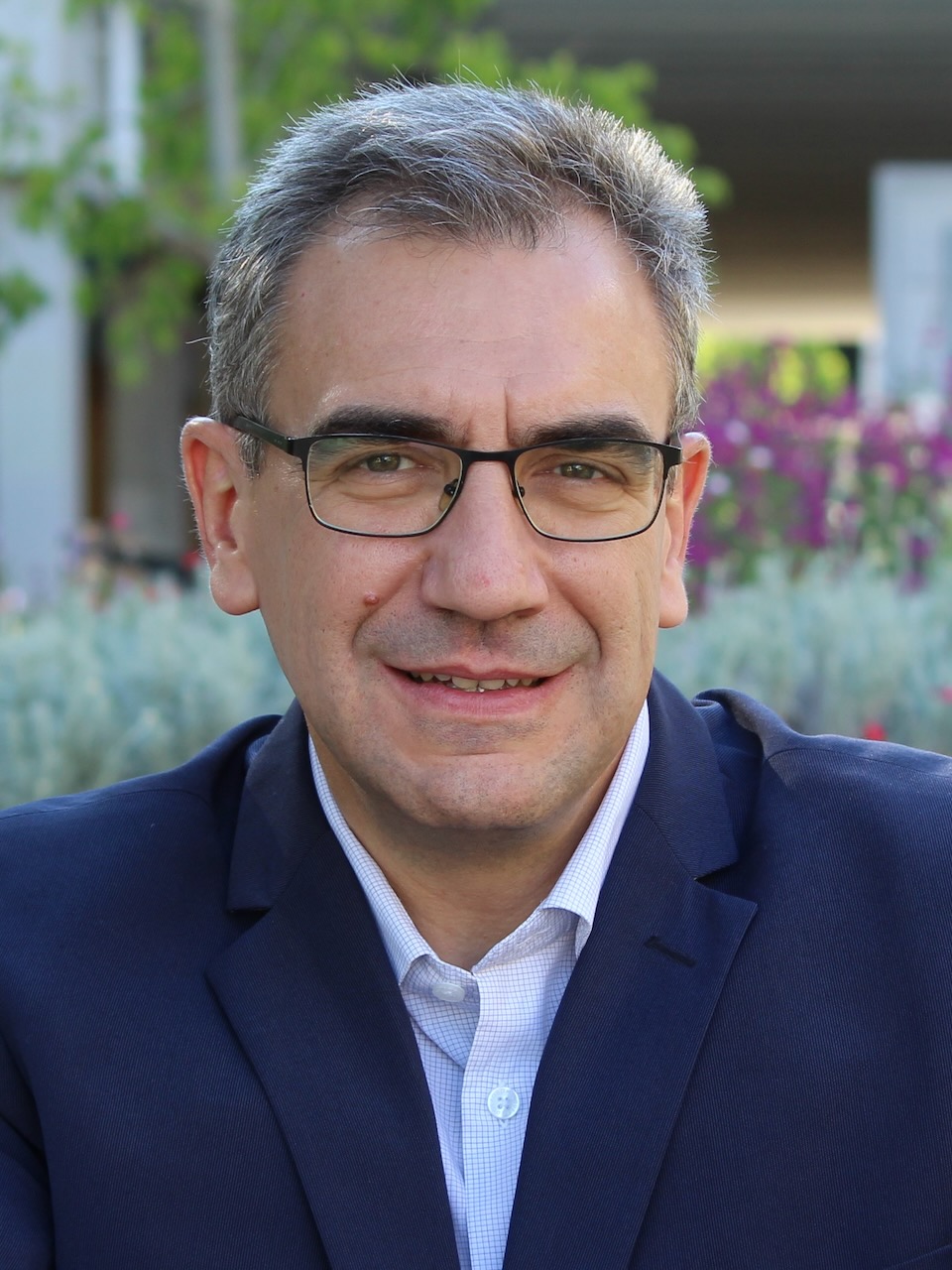
Title: Carrier-Phase Localization and Sensing in Phase-Coherent Distributed Antenna Systems
Abstract: Accurate localization and sensing are key enablers for future 5G and 6G networks, supporting applications in intelligent transportation, logistics, monitoring, and autonomous systems. While carrier-phase measurements are the foundation of high-precision GNSS, their integration into wireless networks remains an open challenge due to the inherent ambiguity resolution problem. The talk first reviews the principles of carrier-phase positioning and highlights the unique threshold behavior arising from the mixed real–integer nature of the estimation problem. A novel mixed real–integer performance bound is presented, capable of accurately predicting positioning performance across both successful and unsuccessful ambiguity-resolution regimes, overcoming the limitations of classical Cramér–Rao bounds. The presentation then explores carrier-phase positioning in phase-coherent distributed antenna systems and cell-free massive MIMO deployments, where large distributed apertures enable the exploitation of near-field wavefront curvature for joint localization, synchronization, and environmental mapping. Key enablers and open research challenges are examined, including multi-epoch processing, mobility, cycle slips, multi-band carrier-phase measurements, low-complexity initialization methods, use in non-terrestrial networks, and the effect of multipath. The results indicate that 5G and 6G networks can provide highly favorable conditions for carrier-phase positioning, potentially enabling centimeter-level localization performance beyond what is achievable with conventional delay-based methods.
Bio:Gonzalo Seco-Granados received the Ph.D. degree in telecommunications engineering from the Universitat Politècnica de Catalunya in 2000, and the M.B.A. degree from IESE Business School in 2002. From 2002 to 2005, he was with the European Space Agency, where he contributed to the design of the Galileo system. He is currently a Professor in the Department of Telecommunications at the Universitat Autònoma de Barcelona (UAB) and Director of the Centre for Space Studies and Research. In 2015, 2019, and 2022, he was a Fulbright Visiting Scholar at the University of California, Irvine, USA. His research interests encompass signal processing for GNSS, LEO-PNT, and 5G/6G integrated communications, localization, and sensing. He has contributed to the design of two Galileo services, the Open Service Navigation Message Authentication and the Signal Authentication Service. He has been a member of the IEEE Signal Processing Society Sensor Array and Multichannel Technical Committee (2019–2024) and the EURASIP Signal Processing for Multisensor Systems Technical Committee since 2022. He also served as President of the Spanish Chapter of the IEEE Aerospace and Electronic Systems Society (2018–2025). He is a Fellow of the IEEE. He received the 2021 IEEE Signal Processing Society’s Best Paper Award.
Maksim Skorobogatiy
Canada Research Chair I, Department of Engineering Physics, Polytechnique Montréal Engineering school of the University of Montréal Montréal, Québec, Canada
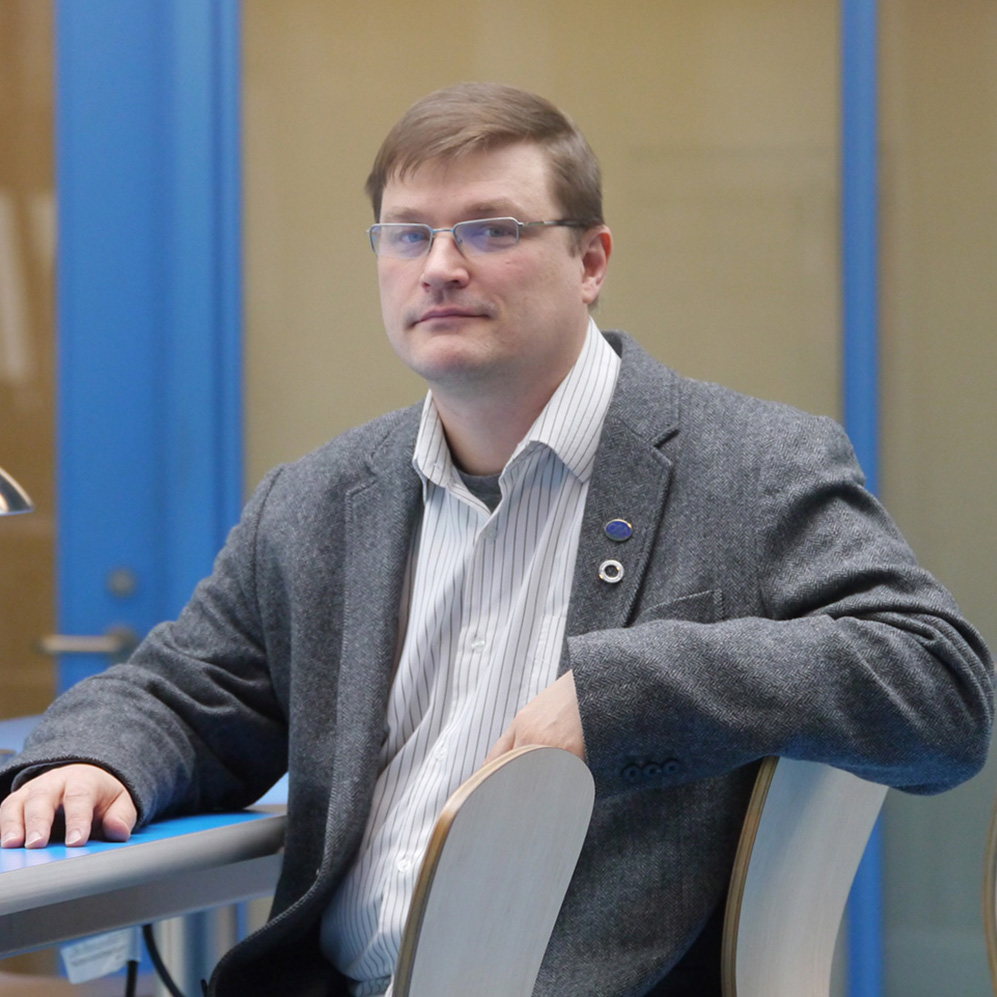
Title: Fiber-assisted THz communications: needs, challenges and perspectives
Abstract: Fiber-assisted terahertz (THz) communication promises ultra-high bandwidths comparable to those of THz wireless links with the reliability and flexibility of optical fiber networks. THz fibers can in principle operate anywhere in the 0.1-10THz spectral range, while natively supporting data rates exceeding 100 Gbps per channel (even the baseband) reaching the terabit-per-second (Tbps) compounded rates without the need of costly conversion into the optical domain. Fiber-assisted THz communications have a myriad of direct and immediate applications in THz fronthaul and backhaul networks, fiber-backed THz wireless communications, indoor 6G networks, data center interconnects, chip-to-chip and board-to-board communications, integrated sensing and communication, and other fields. Many technical challenges remain in building THz fibers and THz fiber networks that include fiber medium-to-high propagation losses, need for advanced dispersion management, lack of efficient sources at higher THz frequencies, issues with fiber-wireless integration, as well as lack of many components and systems for a full THz network implementation. This talk discusses the motivation, key challenges, enabling technologies, and future research directions of fiber-assisted THz communications.
Bio: Dr., P.Eng. M. Skorobogatiy graduated in 2001 from MIT with a Ph.D. in Physics and MSc in Electrical Engineering and Computer Science departments. He then worked at the MIT spin-off Omniguide Inc. on the development of hollow-core fibers for the guidance of high-power mid-IR laser beams for medical surgery applications. He is now a full professor at Polytechnique Montréal, Canada, and holds a Tier 1 CRC in Ubiquitous THz Photonics. In 2015 he was awarded the rank of Professional Engineer by the Order of Engineers of Québec, Canada. In 2017 he was elevated to Fellow of the Optical Society of America for his pioneering contributions to the development of microstructured and photonic crystal multi-material fibers and their applications to light delivery, sensing, smart textiles, and arts. In 2021 he was elevated to Fellow of the American Physical Society and in 2022 to Fellow of the SPIE for his contribution to applied optics. M. Skorobogatiy is also a senior member of the IEEE. Since 2023 he is a technology advisor to a Silicon Valley start-up Attotude Inc., which is at the forefront of revolutionizing data centers through advanced interconnect technology based on wired THz transceivers.